
A single second of delay can shrink conversions by 7 percent, making site speed a crucial factor for every American Shopify store owner. Fast-loading online shops capture customer attention and influence sales before visitors even click a product. With competition fierce across the American e-commerce landscape, understanding key speed metrics and proven optimization strategies can help store owners stay ahead while building trust and maximizing revenue.
Table of Contents
- Shopify Site Speed And Core Concepts
- How Speed Influences User Experience
- Seo Performance And Site Speed Correlation
- Revenue, Conversion Rates, And Customer Trust
- Measuring And Diagnosing Speed On Shopify
- Best Practices For Shopify Speed Optimization
Key Takeaways
| Point | Details |
|---|---|
| Site Speed is Critical | Site speed significantly impacts customer experience, conversion rates, and revenue for Shopify stores. Aim for load times under 2 seconds to maximize effectiveness. |
| Optimization Affects Trust | Fast-loading websites foster trust and confidence, while slow sites create negative associations that can deter customers. Prioritize speed in design to improve user perception. |
| SEO and Performance Connection | Site speed is a key ranking factor in search engines, affecting online visibility. Regular speed audits help maintain a competitive edge in search rankings. |
| Continuous Monitoring is Essential | Regular performance audits using tools like Google PageSpeed Insights can identify bottlenecks and opportunities for improvement, ensuring optimal site functionality. |
Shopify Site Speed and Core Concepts
Site speed is the fundamental performance metric that determines how quickly your online store loads and responds to user interactions. In the competitive world of e-commerce, speed isn’t just a technical detail — it’s a critical business driver that directly impacts customer experience, conversion rates, and overall revenue.
Understanding site speed requires examining multiple technical components that influence performance. These include server response times, image optimization, code efficiency, browser caching, and content delivery networks (CDNs). Research indicates that improving site speed by just half a second can dramatically boost conversion rates, underscoring the immense importance of optimization.
The core metrics for measuring site speed include page load time, time to first byte (TTFB), and overall rendering speed. These technical measurements translate directly into user experience — slow-loading pages create friction, increase bounce rates, and ultimately drive potential customers away. High-performing Shopify stores typically aim for load times under 2 seconds, which requires strategic optimization across hosting infrastructure, theme design, and asset management.
Here is a summary of key site speed metrics and their impact on Shopify stores:
| Metric | What It Measures | Business Impact |
|---|---|---|
| Page Load Time | Time to fully display a page | Directly affects bounce rate and conversion rates |
| Time to First Byte | Server response speed | Signals to search engines about site responsiveness |
| Rendering Speed | How fast content is shown | Influences user satisfaction and brand perception |
| First Contentful Paint | When first element is visible | Impacts perceived loading speed by customers |
Pro Tip for Speed Optimization: Conduct a comprehensive speed audit quarterly, using tools like Google PageSpeed Insights to identify and systematically address performance bottlenecks before they impact your store’s conversion potential.
How Speed Influences User Experience
User experience on an e-commerce platform is fundamentally tied to website performance, with speed serving as a critical psychological trigger that determines customer engagement and purchasing behavior. Every millisecond matters in the digital shopping landscape, where users make split-second decisions about whether to stay or abandon a website.
Neurological research reveals that delays in page load times can disrupt dopamine flow and trigger stress responses in users, creating an immediate negative emotional connection with the online store. This physiological reaction translates directly into measurable business outcomes: a single second of delay can reduce conversions by 7%, demonstrating the profound impact of speed on user satisfaction and purchasing decisions.
The psychological mechanisms behind speed perception are complex. Users don’t just measure time objectively; they experience loading times emotionally. Slow websites communicate unreliability, while fast sites convey professionalism, competence, and respect for the customer’s time. This perception extends beyond mere technical performance — it becomes a reflection of the brand’s overall quality and commitment to user experience.
Pro Tip for User Experience Optimization: Design your Shopify store with a “speed-first” mentality, prioritizing performance metrics as carefully as you would visual design elements, recognizing that technical speed is now a fundamental aspect of modern customer experience.
SEO Performance and Site Speed Correlation
Site speed has evolved from a technical metric to a critical component of search engine optimization strategy. Modern search algorithms increasingly prioritize website performance as a key ranking factor, directly connecting technical infrastructure with online visibility and user engagement.
Google’s ranking algorithms now explicitly use site speed as a determining factor for search engine placement, transforming site performance from a peripheral concern to a core strategic priority. Core Web Vitals have become primary ranking signals, measuring website responsiveness, interactivity, and visual stability as fundamental indicators of user experience.
The correlation between site speed and SEO performance is multifaceted. Faster websites not only rank higher but also generate more engaged user interactions. Search engines interpret rapid load times as a proxy for quality content and user-friendly design, rewarding quick-loading sites with improved search rankings. This creates a virtuous cycle where technical optimization directly influences marketing performance, compelling Shopify store owners to view site speed as a strategic asset rather than a mere technical requirement.
Pro Tip for SEO Speed Optimization: Conduct monthly speed audits using integrated tools like Google PageSpeed Insights, systematically addressing performance bottlenecks to maintain a competitive edge in search engine rankings and user experience.
Revenue, Conversion Rates, and Customer Trust
Site performance is no longer just a technical consideration — it’s a critical financial lever that directly impacts a Shopify store’s bottom line. Every fraction of a second in loading time translates into tangible revenue implications, creating a direct correlation between technical optimization and business success.

Reducing average load time by just 2.2 seconds can generate a 15.4% increase in download conversions, demonstrating the profound financial impact of site speed optimization. Accelerating site response to under 2.5 seconds significantly reduces checkout abandonment rates, which directly enhances customer trust and ultimately boosts sales performance.
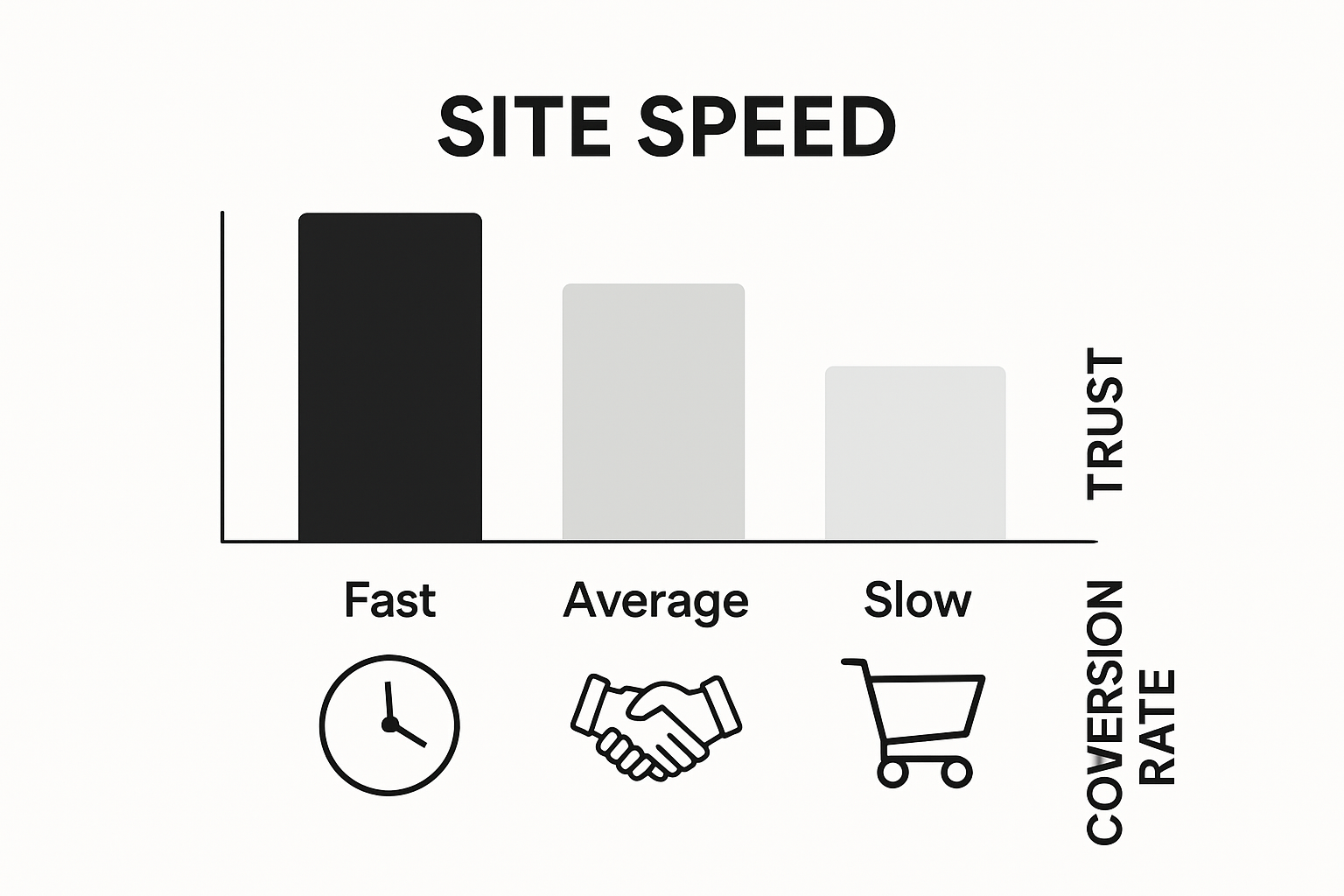
The relationship between site speed and customer trust is psychological and immediate. Potential customers subconsciously interpret slow-loading websites as indicators of unprofessionalism, potential security risks, or organizational inefficiency. Conversely, rapid, smooth website interactions build confidence, suggesting a modern, reliable, and customer-focused business that values user experience. This trust manifests directly in higher conversion rates, increased average order values, and improved customer retention.
The table below contrasts high-performing and low-performing Shopify stores in terms of speed and business outcomes:
| Store Speed Category | Typical Load Time | Customer Trust Level | Conversion Rate Trend |
|---|---|---|---|
| High-performing Store | Under 2 seconds | High (confidence boost) | Increased conversions |
| Low-performing Store | Over 3 seconds | Low (trust declines) | Higher abandonment, fewer sales |
Pro Tip for Revenue Optimization: Implement progressive loading techniques and optimize critical rendering paths to create the perception of instant responsiveness, even when complete page load might take slightly longer.
Measuring and Diagnosing Speed on Shopify
Effective site speed optimization begins with comprehensive and strategic measurement techniques that provide actionable insights into your Shopify store’s performance. Understanding the nuanced metrics and diagnostic tools is crucial for identifying and resolving potential bottlenecks that could impact user experience and conversion rates.
Utilizing specialized performance tracking tools like Google PageSpeed Insights and Shopify’s Web Performance Dashboard enables merchants to conduct detailed technical assessments of their online stores. These diagnostic platforms evaluate multiple critical performance indicators, including page load times, server response speeds, resource rendering efficiency, and mobile responsiveness, providing a holistic view of potential optimization opportunities.
Regular performance audits are essential for maintaining optimal website functionality, allowing store owners to proactively identify and address emerging speed issues before they negatively impact user experience. This ongoing monitoring process involves analyzing key metrics such as First Contentful Paint, Time to Interactive, and Largest Contentful Paint, which collectively provide a comprehensive understanding of site performance across different user interaction stages.
Pro Tip for Performance Diagnostics: Conduct monthly comprehensive speed audits, comparing current performance against baseline metrics and industry standards, to ensure continuous improvement and maintain a competitive edge in site responsiveness.
Best Practices for Shopify Speed Optimization
Speed optimization for Shopify stores requires a strategic, multifaceted approach that addresses technical performance across multiple dimensions. Successful optimization is not about implementing isolated tactics, but developing a comprehensive performance enhancement strategy that considers every aspect of website architecture and user interaction.
Critical optimization strategies include selecting lightweight themes and conducting rigorous app audits to prevent performance degradation. Merchants must critically evaluate each installed application’s performance impact, removing unnecessary plugins and selecting streamlined, efficiently coded extensions that contribute minimal overhead to the site’s overall loading time. This process involves systematically assessing each app’s resource consumption, update frequency, and compatibility with modern web performance standards.
Advanced optimization techniques extend beyond simple theme selection and app management. Successful Shopify store owners implement sophisticated strategies like image compression, leveraging browser caching, minimizing HTTP requests, utilizing content delivery networks (CDNs), and implementing lazy loading for images and complex page elements. These technical interventions work synergistically to create a seamless, rapid user experience that supports both immediate conversion goals and long term customer retention.
Pro Tip for Performance Engineering: Develop a quarterly performance optimization ritual, treating your Shopify store’s speed as a dynamic, continuously evolving system that requires consistent monitoring and strategic refinement.
Unlock Faster Shopify Performance for Greater Growth and Conversions
Speed is the heartbeat of your Shopify store’s success. If you have felt the frustration of slow load times reducing your conversions and leaving customers doubting your brand, you are not alone. This article highlights critical metrics like page load time and time to first byte that directly impact user trust and SEO rankings. Addressing these challenges with strategic speed optimization can dramatically boost revenue and customer loyalty.
Take control of your Shopify store’s speed with expert support from Blackbelt Commerce. Recognized for delivering custom Shopify solutions, from theme development to advanced optimization tactics, Blackbelt Commerce empowers merchants with cutting-edge technical improvements and ongoing performance management. Don’t let slow speeds hold your business back.
Are you ready to turn your site speed into a powerful advantage for growth?

Explore how our proven process at Blackbelt Commerce transforms Shopify stores for high performance. Visit our portfolio and case studies to see real results. Connect today for a consultation and start accelerating your conversions with a faster, smoother Shopify experience.
Frequently Asked Questions
How does site speed affect conversion rates on Shopify?
Site speed directly impacts conversion rates; slow-loading pages can lead to higher bounce rates, as customers are likely to abandon a site that takes too long to load. Improving load times can increase conversions significantly, as research shows that even a small delay can reduce conversions by up to 7%.
What are the key metrics for measuring site speed?
The primary metrics for measuring site speed include page load time, time to first byte (TTFB), overall rendering speed, and First Contentful Paint. These metrics help assess how quickly a user can interact with and visualize content on the site.
What optimization techniques can improve Shopify site speed?
To enhance site speed, consider techniques such as image compression, leveraging browser caching, minimizing HTTP requests, utilizing content delivery networks (CDNs), and implementing lazy loading for images. These strategies work together to create a faster and more efficient user experience.
Why is site speed important for SEO?
Site speed is crucial for SEO as search engines like Google prioritize faster websites in their rankings. A faster site tends to rank higher because it provides a better user experience, leading to increased user engagement and satisfaction, which can ultimately boost search visibility. Dyb Vekselheim